Nile Harris & Dyer Rhoads
Director
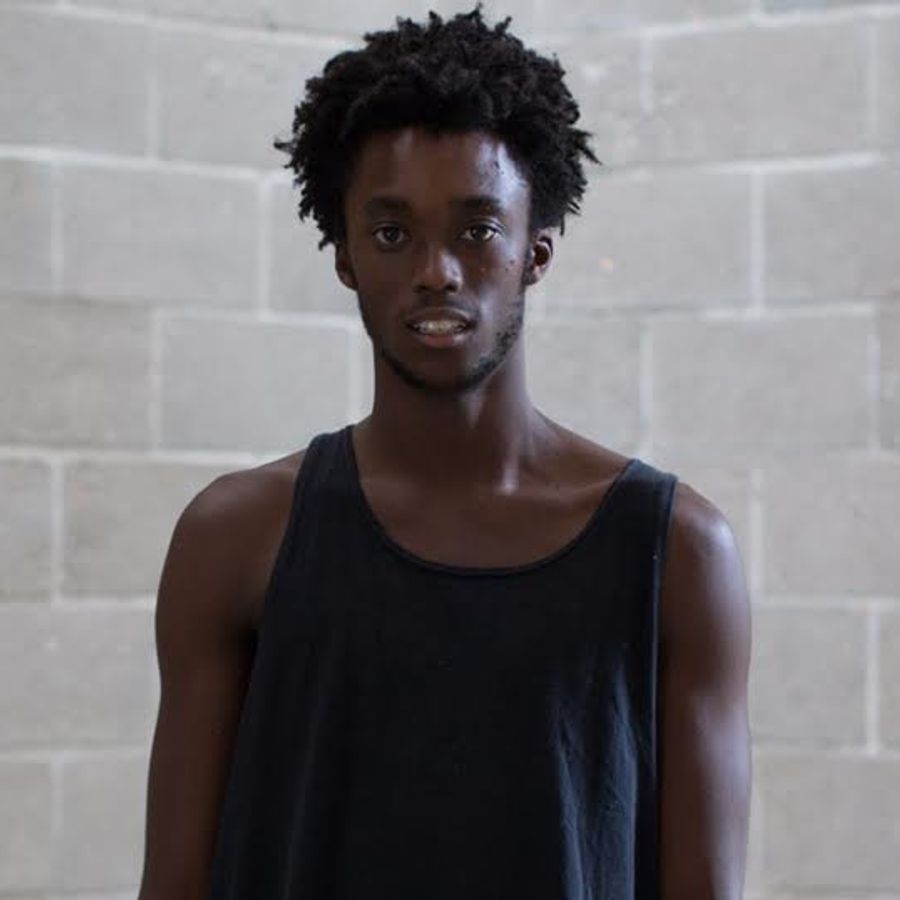
Nile Harris is a theatre-maker and performer from Miami, currently based in New York. Although his career is still in its infancy, he has already grown into a phenomenon there. In his sharp, humorous, and tumultuous performances, he takes an unvarnished aim at American culture. Vulture magazine aptly characterises his work as: "a whole kettleful of biting, boiling, truly gonzo theatricality that’s equal parts deadly serious and gleefully self- (and everyone-)mocking."
Harris navigates between the gallery and the theatre, and between diverse disciplines: from clowning and installation art to dance and (improvised) theatre. In this house is not a home (2023), for example, a gigantic bouncy castle is inflated on stage while the fascist tendencies of America under Trump’s terms are dissected. His most recent work, however, took place in a museum context. At the prestigious 2026 Whitney Biennial, he presented the work Dark Brown Birkin Bag (2026), accompanied by the telling wall text: "artist’s skin, thread, and hardware."
It was through clowning workshops that Harris discovered the potential of physical expression. His work is physical, energetic, and expressive. A kind of radical, heightened form of clowning. According to Harris, 60% of his performances is fixed in advance, while 40% is improvised. He believes this is the only way to capture the instability and chaos of this world within his artistic work.
Harris is far from a solo artist; his work emerges from intense collaborations with like-minded peers in the New York scene. For instance, performer Malcolm-x Betts often joins him on stage. In their duet Temporary Boyfriend (2025), this long-term collaboration takes centre stage. They explore Black gay kinship by weaving together ancestral memories, the legacy of the AIDS epidemic, and the fleeting solidarities of contemporary queer brotherhood. Closer to Ghent, this duet was previously shown at the celebrated Serpentine Galleries in London.
Now, Harris comes to Europe for an extended period for the first time. At the invitation of CAMPO, he will spend a month working in our studios alongside his long-time dramaturg and visual designer, Dyer Rhoads. Together, they will explore how their work resonates within the Ghent and European context. Harris’s work invariably arises from a confrontation with institutional frameworks and through encounters with artists from the local scene. It is time for an introduction to the European art scene and, above all, a time to stir up artistic tumult with his enthusiastic energy.